
 Chef Pam Soontornyanakij is Asia's best female chef, and she loves pad Thai. Here are her picks for the best in Bangkok, from trendy wagyu pad Thai at May Rai to old school Thipsamai.
For many visitors to Bangkok, pad Thai – stir-fried rice noodles tossed in a wok with prawn, eggs, peanuts and bean sprouts – acts as the unofficial ambassador to Thailand's vibrant cuisine. But pad Thai wasn't even part of Thai life until the 1930s.
The history of stir-fried noodles in Thailand goes back to the Chinese immigrants who introduced rice noodles to the region in the 18th Century. After the end of World War One, military officer Plaek Phibunsongkhram – known as Phibun – led a coup and came to power, ending Thailand's absolute monarchy. While cementing his authority, Phibun aimed to create a strong national identity and modernise the war-ravaged nation to avoid European invasions. So he engineered an economical, filling and nutritious diet, turning to inexpensive Chinese rice noodles and promoted a nationwide "noodle is your lunch" campaign, encouraging chefs to make rice noodles more Thai.
"Many ingredients in pad Thai like rice noodles belonged to Chinese immigrants. It's very Thai-Chinese," says Pam Pichaya Soontornyanakij, a Bangkok-born chef known for her progressive Thai-Chinese cuisine restaurant Potong. "But it was created to feed the Thai nationality, so people feel more Thai. And it worked."
Since 2002, a "Global Thai" campaign to boost Thailand's tourism-heavy economy and the country's image worldwide led to the opening of many Thai restaurants around the globe, leading people overseas to associate pad Thai with Thailand.
While the dish may not have hundreds of years of history, Soontornyanakij says that pad Thai is very cultural. "I'm proud of pad Thai," says Soontornyanakij, who serves a modernised version of the dish at her restaurant, made with shrimp and topped with a Thai flag made of naturally-coloured red, white and blue rice noodles. "It portrays the struggles and the survival of the Thai people. And it's become a staple today. It represents our landscape, our history."
Here are Soontornyanakij's top picks for pad Thai in Bangkok.
1. Best for a historical experience: Thipsamai
While you can find pad Thai in every nook and cranny across Bangkok, no pad Thai spot is as legendary as Thipsamai.
"Everyone usually has the same flavour profile in their pad Thai – sour, salty and sweet – but the magic of pad Thai is the balance of both flavour and texture," says Soontornyanakij. Everyone makes pad Thai in their own way, she explains. "And there's nothing wrong with that, but I love Thipsamai because the noodles are slippery, and not sticky. That means that they add quite a lot of fat."
Tip:
"Good pad Thai has to have enough fat. You know, when a French chef cooks without butter, it's not good right? It's like that with pad Thai," says Soontornyanakij. "You've got to add enough fat and sauce to make the noodles smooth and velvety."
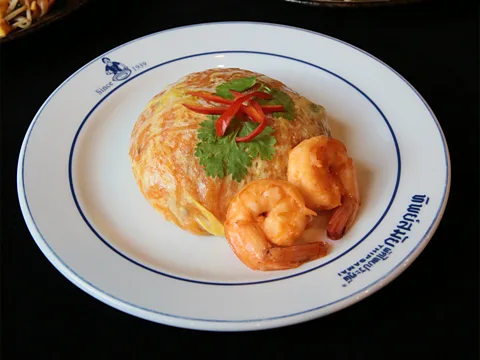
Thipsamai's original version of pad Thai is cooked with softer and tender sen chan noodles from Thailand's Chanthaburi province and prawn oil made to a family recipe – it's the secret to their popularity. The portion of noodles comes enveloped in a thin vellum of egg.
There are now several outlets across the city, but Soontornyanakij says that their old town location inside a warmly lit wooden building remains the most iconic. Thipsamai's desire to serve Bangkok residents began nearly a decade ago when a young woman called Samai began selling pad Thai on a boat across one of the city's canals during World War Two. The couple's son Sikarachat Baisamut now continues their legacy.
إرسال تعليق